
Ori Tahiti Brasil
Leia Mais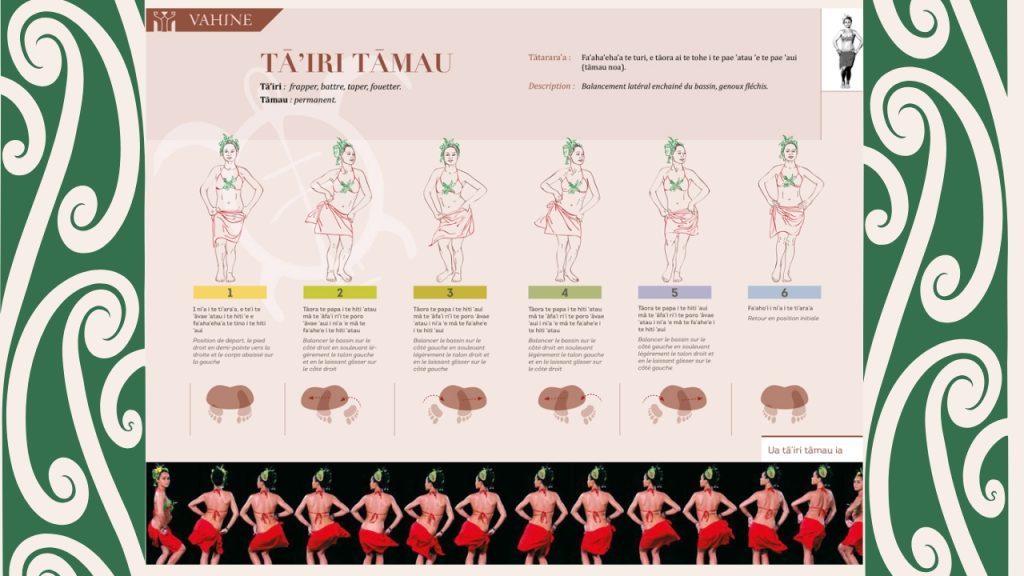
Ori Tahiti step
The Steps of Tahitian Dance ‘Ori Tahiti is a vibrant and traditional dance from Tahiti, rich in steps that evolve [...]
The Steps of Tahitian Dance
‘Ori Tahiti is a vibrant and traditional dance from Tahiti, rich in steps that evolve based both on ancient movements and contemporary creations. In 2017, after three years of research, extensive work, and dedication, the Minister of Culture of French Polynesia (Heremoana Maamaatuaiahutapu), together with volunteers from the Artistic Conservatory of French Polynesia (Te Fare Upa Rau), the Ori Tahiti Federation, Large Traditional Groups, and dancers, reached an important milestone by cataloging, in a book entitled “Ta’o no te ‘Ori Tahiti”, 58 steps and 6 postures of ‘Ori Tahiti.
Purpose of the Book:
According to the authors themselves, the intention of the book is not to teach the steps nor serve as a pedagogical guide, although it describes and illustrates the cataloged steps and postures in detail. It is, in fact, a way to preserve and organize the tradition of an ancestral practice, serving as a tool for local teachers, school directors, and group leaders. The approach is both linguistic and artistic, describing step by step some movements and postures that range from historical to contemporary. It is worth noting that the coding does not aim to cover all existing ‘Ori Tahiti steps, but rather the main and most practiced ones.
Exclusive Edition and Distribution
The book is an exclusive edition: only 350 copies were printed and distributed to native ‘Ori Tahiti schools and group leaders in some major schools around the world. This measure ensures that the knowledge remains close to its roots, preserving the essence of the dance.
Division of Steps:
- Female (Vahine): 32 steps
- Male (Tane): 26 steps
- Postures: 6
It is important to note that this coding does not represent all existing ‘Ori Tahiti steps. According to the Conservatory directors, the recovery of traditional steps and the emergence of new contemporary variations are not only accepted but also encouraged. The dance is seen as a living art form, growing and transforming, especially with the worldwide expansion of ‘Ori Tahiti and its increasing popularity.
Structure of the Book “Ta’o no te ‘Ori Tahiti”
The book is organized into two sections: one dedicated to male movements (tāne) and another to female movements (vahine). Below is the list of the 58 cataloged steps and 6 postures:
| FEMALE | MALE | POSTURES |
|---|---|---|
| 1 - Tā'iri tāmau | 1 - Pā'oti | 1 - Fāriuriu/ hurihuri |
| 2 - Tā'iri toma | 2 - 'Amaha | 2 - Pārahi tīfene |
| 3 - Fa'arapu | 3 - Fa'ahe'e | 3 - Pārahi tīfene |
| 4 - 'Afata | 4 - Haere pārahi | 4 - Tīpapa |
| 5 - 'Amaha | 5 - Haere tīfene | 4 - Tūturi hō’ē ’āv ae |
| 6 - Fa'ahe'e | 6 - Horo | 5 - Tūturi pārahi |
| 7 - Fa'arori (fa'a'ohu) | 7 - Hūpapi (tātu'e) | 6 - Tūturi ti’a |
| 8 - Fa’arūrū | 8 - Ne'e 'ānimara | |
| 9 - Ha'amenemene | 9 - Ne'e pārahi | |
| 10 - Haere tīfene | 10 - Nu'u | |
| 11 - Horo | 11 - 'Ōpapa | |
| 12 - Ne'e 'ānimara | 12 - 'Ori 'ōpū | |
| 13 - Ne'e pārahi | 13 - 'Ōu'a ha'ape'e tūf etu | |
| 14 - Nu'u | 14 - 'Ōu'a 'ōfati | |
| 15 - Nu'u fa'atere | 15 - 'Ōu'a pātia | |
| 16 - Nu'u tīfene | 16 - Pātia | |
| 17 - Nu'u te'i | 17 - Taparuru | |
| 18 - Ope | 18 - Tōtoro | |
| 19 - 'Ori 'ōpū | 19 - Tua-ne'e | |
| 20 - 'Ōtamu | 20 - Tu'e | |
| 21 - Pa'ipa'i | 21 - Tūmami ('ami) | |
| 22 - Peipei | 22 - Tūtāperepere (peretete) | |
| 23 - Tāhapehape | 23 - Tūte'i | |
| 24 - Tārou | 24 - Ueue | |
| 25 - Te'i | 25 - 'Uī | |
| 26 - Toro | 26 - Vehe | |
| 27 - Tōtoro | ||
| 28 - Tua-ne'e | ||
| 29 - Tūmami ('ami/'ami'ami/fa'a'ami'ami) | ||
| 30 - 'Uī | ||
| 31 - Varu | ||
| 32 - Vehe |
Note: As mentioned, there are still many steps — traditional, modern, or variations — that were not listed in the book. For female steps, the variety exceeds 50.
Teaching Methodologies and the Importance of Basic Steps
In practical classes, each school or teacher develops its own methodology for teaching steps. Although there is no fixed rule, there is consensus among native and international schools regarding the basic and main steps of ‘Ori Tahiti. These steps serve as a foundation for learning, allowing the development of body awareness, technical precision, and fluidity.
Even though they are called "basic," these movements require a high level of technique and concentration. Mastering these fundamentals is essential to progress to intermediate and advanced levels, where step complexity increases significantly.
The cataloging of the 58 steps and 6 postures in the book “Ta’o no te ‘Ori Tahiti” represents a milestone in the preservation and enhancement of ‘Ori Tahiti tradition. At the same time, it reinforces the importance of flexibility and creativity in creating new steps, reflecting the historical richness and adaptability of this living art. The initiative also contributed to the recognition of ‘Ori Tahiti as French intangible cultural heritage and its inclusion in the UNESCO World Heritage list.
Want to learn the steps of Tahitian dance? Contact us to schedule a trial class to learn or improve your technique and connect with the tradition of ‘Ori Tahiti!